NEWS | VIDEO
Jony Joins OpenAI
Sam & Jony introduce io

A moment in history we’ll look back on in twenty years.
Sir Jony Ive, the visionary behind Apple’s most iconic products, has officially joined OpenAI. This collaboration between one of the greatest design minds of our time and one of the most influential AI labs signals a seismic shift—not just in what technology can do, but in how it feels, looks, and integrates into our lives.
Known for crafting objects that have shaped our digital age, Jony now steps into the world of artificial intelligence—a space still in its formative years, where design has yet to find its full voice. His arrival at OpenAI suggests that the future of AI won’t just be about intelligence, but about intention, usability, and human experience.
I for one will be looking forward to see what products they bring to market.

Press Release
May 21, 2025
This is an extraordinary moment.
Computers are now seeing, thinking and understanding.
Despite this unprecedented capability, our experience remains shaped by traditional products and interfaces.
Two years ago, Jony Ive and the creative collective LoveFrom, quietly began collaborating with Sam Altman and the team at OpenAI.
A collaboration built upon friendship, curiosity and shared values quickly grew in ambition. Tentative ideas and explorations evolved into tangible designs.
The ideas seemed important and useful. They were optimistic and hopeful. They were inspiring. They made everyone smile. They reminded us of a time when we celebrated human achievement, grateful for new tools that helped us learn, explore and create.
It became clear that our ambitions to develop, engineer and manufacture a new family of products demanded an entirely new company. And so, one year ago, Jony founded io with Scott Cannon, Evans Hankey and Tang Tan.
We gathered together the best hardware and software engineers, the best technologists, physicists, scientists, researchers and experts in product development and manufacturing. Many of us have worked closely for decades.
The io team, focused on developing products that inspire, empower and enable, will now merge with OpenAI to work more intimately with the research, engineering and product teams in San Francisco.
As io merges with OpenAI, Jony and LoveFrom will assume deep design and creative responsibilities across OpenAI and io.
We could not possibly be more excited.
Sam & Jony
"“I have a growing sense that everything I have learned over the last 30 years has led me to this moment. While I am both anxious and excited about the responsibility of the substantial work ahead, I am so grateful for the opportunity to be part of such an important collaboration. The values and vision of Sam and the teams at OpenAI and io are a rare inspiration.”"

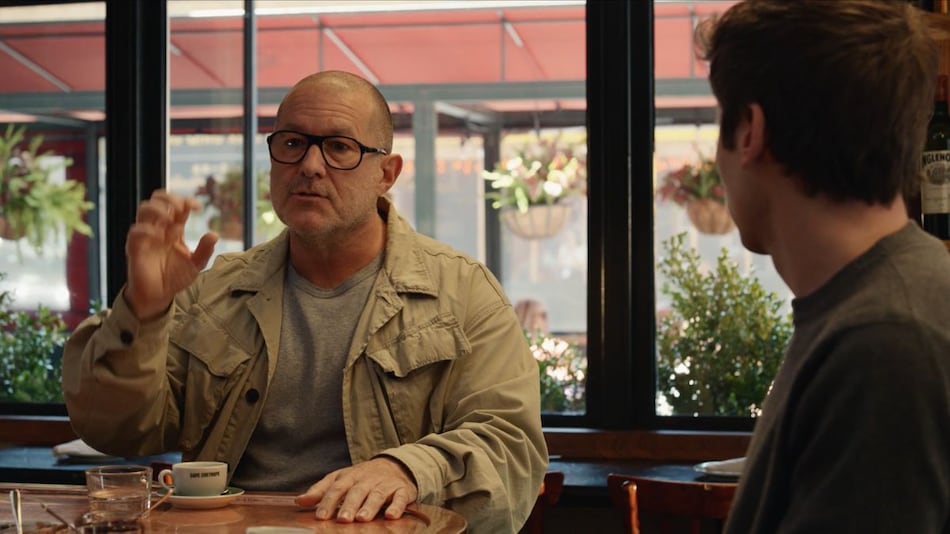
We may one day look back on this as a defining moment in design and technology history.
Sir Jony Ive, the creative force behind Apple’s most iconic products, has officially joined OpenAI. It’s the kind of announcement that sends ripples through both the tech and design worlds—one of those rare moments where you can almost feel the future shifting beneath your feet. This partnership between a design legend and an artificial intelligence powerhouse marks more than just a headline—it may very well define the next era of human-computer interaction.
Why This Moment Matters
For decades, Jony Ive has shaped the way we live with technology. From the tactile elegance of the original iMac to the minimalist purity of the iPhone, his work has made technology feel personal, desirable, and even emotional. His ethos—that design should be intuitive, human-centered, and quietly powerful—has become a north star for designers everywhere.
By joining OpenAI, Jony brings that philosophy into a space that is still, in many ways, unshaped. Artificial intelligence is evolving rapidly, but its interfaces, experiences, and emotional resonance remain largely undefined. This is where design matters most—when things are still fluid, still being imagined.
Design’s Role in AI’s Next Chapter
AI has already proven its utility. It can write code, compose music, generate images, and simulate conversations. But usefulness is not the same as usability. And more often than not, the interfaces we use to engage with these tools feel cold, transactional, or opaque.
Jony Ive’s involvement suggests a shift toward an AI experience that is not just powerful, but profoundly human. Imagine AI tools that feel as thoughtfully designed as the iPhone—where every interaction is considered, every detail meaningful, and every decision driven by empathy for the user.
This is not about giving AI a glossy sheen. It’s about rethinking how intelligence can be made accessible, trusted, and elegant. It’s about designing the relationship between humans and machines.
What This Means for Designers
For those of us in the design world, this is a wake-up call—and an invitation. The age of AI isn’t something that will happen to us. It’s something we have the power to shape. As AI becomes more embedded in the tools we use and the decisions we make, designers have a critical role to play in ensuring these systems are ethical, inclusive, and intuitive.
With Jony at the table, design is no longer an afterthought in AI. It’s a strategic priority.
Looking Ahead
This collaboration could lead to entirely new product categories—devices and experiences that merge design and intelligence in ways we haven’t yet imagined. It could redefine the role of the designer in the AI age, and challenge all of us to think more holistically about the systems we’re building.
If there’s one thing Jony Ive has always done well, it’s bringing clarity to complexity. And in the fast-moving, often overwhelming world of AI, that might be exactly what we need.
Final Thought
This isn’t just a high-profile hire. It’s a signal. A statement that the future of technology is not only about what it can do, but about how it makes us feel. It’s a reminder that design isn’t decoration—it’s direction.
As designers, technologists, and curious minds, we’ll be watching this space closely. Because years from now, we might look back and say: That’s when everything changed.








Keep up to date with the latest Journal entries by subscribing